
Biography
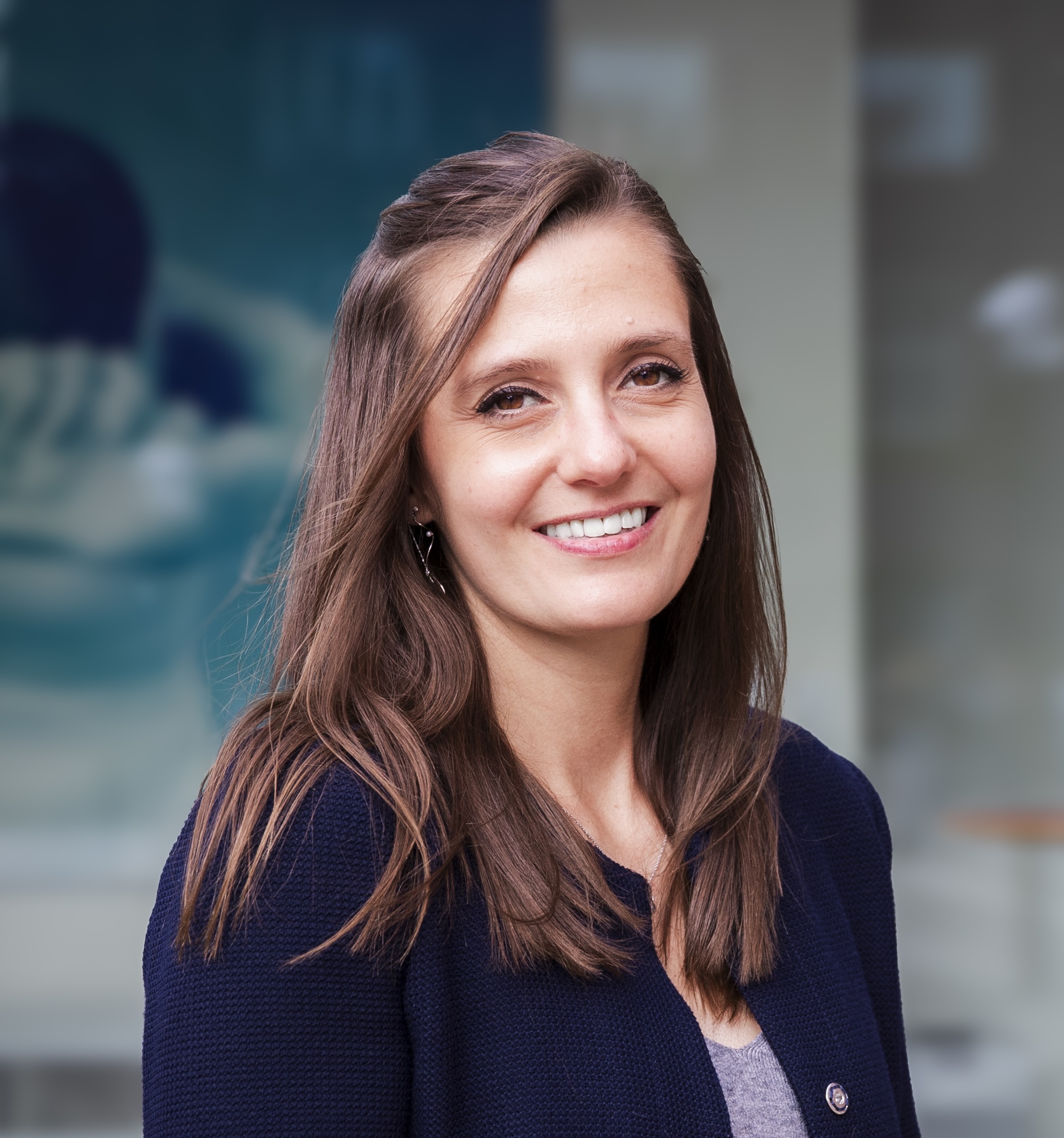
Noémie Jaquier is an assistant professor at the KTH Royal Institute of Technology, where she heads the Geometric Robot Learning (GeoRob) Lab at the Division of Robotics, Perception and Learning. She received her PhD degree from the Ecole Polytechnique Fédérale de Lausanne (EPFL), Switzerland in 2020. Prior to joining KTH, she was a postdoctoral researcher in the High Performance Humanoid Technologies Lab (H²T) at the Karlsruhe Institute of Technology (KIT) and a visiting postdoctoral scholar at the Stanford Robotics Lab. Her research investigates data-efficient and theoretically-sound learning algorithms that leverage differential geometry- and physics-based inductive bias to endow robots with close-to-human learning and adaptation capabilities.
Noémie is the recipient of an ERC Starting Grant for her project GEOMANIP, of a WASP-AI/MLX professorship, and of a starting grant from the Swedish research council. She received several awards, notably the Best Presentation Award at CoRL’19, Best Paper Award Finalists (IROS’23, ICRA’24), the Hector-Stiftung Preis 2024 from the Heidelberg Academy of Sciences, and AI newcomer of Technical and Engineering Sciences 2023 by the German Federal Ministry of Education and Research.
Education and Employment
Since 2024: Assistant professor at the Division of Robotics, Perception and Learning, KTH Royal Institute of Technology
2020 – 2024: Postdoctoral Researcher at the High Performance Humanoid Technology (H2T) group, Karlsruhe Institute of Technology (KIT)
2023-2024: 6-month visiting Postdoctoral Scholar at the Stanford Robotics Lab, Stanford University
2016-2020: D.Sc , Ecole Polytechnique Fédérale de Lausanne (EPFL) and Idiap Research Institute, PhD thesis: “Robot Skills Learning with Riemannian Manifolds: Leveraging Geometry-awareness in Robot Learning, Optimization and Control“
2019: 6-month PhD Sabbatical, Bosch Center for Artificial Intelligence (BCAI)
2016-2020: M.Sc. in Robotics and autonomous systems with minor in Computational Neurosciences, Ecole Polytechnique Fédérale de Lausanne (EPFL)
2011-2014: B.Sc. in Microengineering, Ecole Polytechnique Fédérale de Lausanne (EPFL)
Some highlights…
2026: ERC Starting grant, European Research Council
2026: Starting grant, Swedish Research Council
2026: Keynote at IEEE Intl. Conference on Robotics and Automation (ICRA), Vienna, Austria
2024: Hector-Stiftung Preis, awarded by the Heidelberger Akademie der Wissenschaften and sponsored by the Hector Foundation
2024: Finalist for the IEEE ICRA Best Paper Award on Human-Robot Interaction for our paper “Incremental Learning of Full-Pose Via-Point Movement Primitives on Riemannian Manifolds“
2023: AI newcomer 2023 of Technical and Engineering Science, awarded by The Federal Ministry of Education and Research (BMBF) and German Informatics Society (GI)
2023: Finalist for the IROS Best Paper Award on Mobile Manipulation sponsored by OMRON Sinic X Corp for our paper “On the Design of Region-Avoiding Metrics for Collision-Safe Motion Generation on Riemannian Manifolds“
2020: PhD thesis nominated for the EPFL Asea Brown Boveri Ltd. Award
2019: Best Presentation award at CoRL’19 for our paper “Bayesian Optimization Meets Riemannian Manifolds in Robot Learning“
2019: Idiap PhD Student award
2017: Robotics: Science and Systems (R:SS) 2018 Pioneer
Co-organized events
2026: R:SS’26 — The Geometry of Motion: Physics-Informed Structures for Learning and Control
2026: ICRA’26 — Riemann and Gauss meet Asimov: 3rd tutorial on Geometric Methods in Robot Learning, Optimization, and Control
2024: ICRA’24 — Riemann and Gauss meet Asimov: 2nd tutorial on Geometric Methods in Robot Learning, Optimization, and Control
2023: IROS’23 — Workshop on Assistive Robotics for Citizens
2022: IROS’22 — Riemann and Gauss meet Asimov: A tutorial on Geometric Methods in Robot Learning, Optimization, and Control
2021: R:SS’21 — Workshop on Geometry and Topology in Robotics: Learning, Optimization, Planning, and Control
2020: IROS’20 — Workshop on Bringing Geometric Methods to Robot Learning, Optimization and Control
Teaching highlights
Since 2026: Geometric robot learning, KTH
2021-2023: Riemannian methods for learning in robotics, KIT